
Dr. Johnson is Not Very Smart
(he just reads a lot)

Podcast version of this article
Ignorance and Elitism
Here’s something upon which we can all agree; I’m not very smart. I just read a lot. I say this because people online remind me of how not-smart I am all the time. Some people also say that I’m ignorant. Ignorant means one lacks knowledge. I’m not ignorant, I’m just not very smart. Smart (or intelligence) is the ability to use one’s knowledge to solve real world problems. If I were smart, I’d be able to solve this problem: How can I make millions of dollars like Louisa Moats and Emily Hanford? I’d also be able to solve this problem: How can I get state legislators to understand the negative impact of Science of Reading legislation?
I also want to remind you that I’m not very smart because my writing about the “academy” below might seem a bit snobbish and elitist. By the way, to be elite is to be the very best at something. Wouldn’t we want the very best scholars, researchers, and teachers to make decisions about reading instruction? Wouldn’t we want a bit of elitism here?
Elitism is often used by the Far Right to mean exclusion. However, the very best (elite) scholars that I’ve encountered want the very opposite of exclusion. They want inclusion. They want to include all scholars, teachers, and researchers into the conversation. They want to include all research methodologies, paradigms, and theoretical perspectives into the academy (below). And they want all children to be included in classrooms with elite reading teachers so that they all might achieve their full literacy potential. The only people the elite want to exclude would be state legislators who make very bad laws about reading instruction
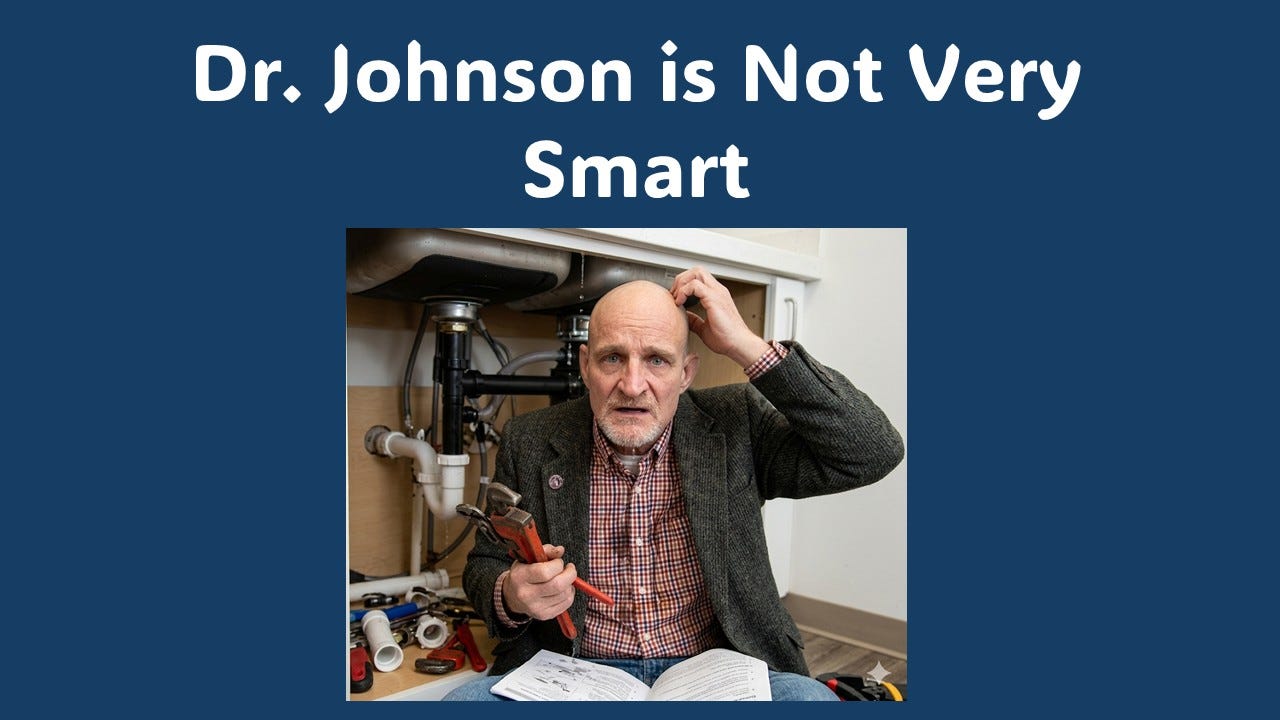
I’ve wandered off topic. See? I’m not very smart. A smart person wouldn’t have done that. But I’m smart enough to realize that when I have a plumbing problem, I don’t call an electrician. Neither do I call a radio journalist or a profiteer dressed as a scholar. When I need to put in a new toilet, I remember what happened the last time I tried to do it myself. When I have a plumbing problem, I call the plumber. And I want that plumber to be elite.
So, in my very not-smart way, I will talk about the academy.
The Academy
The academy (academia) refers to an intellectual ecosystem responsible for the generation, transmission, and preservation of knowledge. Within the academy there are recognized branches of knowledge called academic fields. Members within each field promote and maintain academic standards related to research, scholarly work, and academic discourse.
Reading instruction is part of an academic field. Within this academic field a corpus of research-based knowledge is used to provide context for ongoing academic discourse related to reading instruction. This is the context in which constructive discussions about reading instruction best take place. Not a political context but an academic context.
Outside of an Academic Context
Outside of an academic context, extreme or outlying ideas can seem like good ideas. Here it’s very easy to be snookered by important sounding words like direct, explicit, systematic, rigorous, structured, evidence-based, scientific, diagnostic, extensive, sequential, cumulative, logical order, multisensory, and orthographic mapping. Throw in some brain images along with a couple of big brain words such as occipital lobe, corticothalamic pathways, and neurotransmitters, and state legislators are ready to hand over millions of dollars to for-profit entities.
Outside of an academic context, state legislators must rely on their own shallow and disjointed knowledge bases to understand reading instruction. Their knowledge bases are constructed largely by their own memories of their experiences learning to read as well as the emotions attached to them. However, these memories are distorted by the filter of time, perception, emotion, and other memories. Hence, memory is not always very accurate. And by itself, memory can impede rather than enhance one’s understanding of things. Knowledge is needed to understand reading instruction. But not just any sort of knowledge. To truly understand reading instruction, you would want knowledge generated by elite scholars, researchers, and teachers.
Without adequate knowledge, state legislators must rely on their own memory-based knowledge to build cognitive structures related to reading instruction. A cognitive structure represents how knowledge is organized in long term memory. Although highly inaccurate, these cognitive structures are used to peer out at the world and make sense of things. From the perspective of our state legislators, reading is sounding out words. Reading instruction is a settled science. There’s a massive reading crisis. More phonics is needed. Teachers don’t know how to teach reading. College professors are teaching all the wrong things. And radio journalists are experts in reading instruction.
Robust Academic Discourse
Like any academic field, reading instruction is not a monolithic entity. People have different thoughts about things. And these thought variations are based on differing theoretical perspectives. These thought differences lead to healthy and robust academic discourse. As a result, new questions are asked, new research is conducted, and the field of reading instruction continues to move forward. These differences also act as a form of checks and balances, keeping extreme or outlying ideas from being overemphasized.
The field of literacy instruction was a healthy, vibrant place in the 90’s and early 00s. But those who could not win an argument in an academic context, pulled reading instruction, kicking and screaming, into a political context. In this context, the Science of Reading has become like bad religion. There is an intolerance of differing views. Certain knowledge is ignored or discredited. There is an arrogance of certainty. Reading instruction is said to be a “settled science”. And healthy and robust academic discourse has largely disappeared. As a result, there is an inbreeding of ideas, deleterious cognitive mutations, and a devolution of the academic field. This is what happens when reading instruction becomes political.
Conclusion
I am not very smart. But I am smart enough to know that when you’ve got a plumbing problem, you call a plumber, and hopefully that plumber is an elite plumber.

The International Literacy Coalition
Push back against top-down SoR mandates that disempower teachers. Get involved with the International Literacy Educators Coalition (ILEC). It’s free.
Dr. Johnson is exceptionally smart!!
If he wasn’t, how would he always craft articles which make us smile, give us hope, and always inform us in an entertaining manner?! 😉
Extremely well said, especially for a "not very smart" person! : )