

This is an excerpt from my book, ‘Making Sense of the Science of Reading: Context Matters’ published by Guildford Publishing. It will be out sometime in 2026.
Some of the basics: Your eyes do not move evenly from left to right as you read. Instead, they move in small, jerky movements called saccades. As you read, your eyes skip some words, stop on some words (fixation), and even go back to words previously read (regressions). It only appears as if your eyes are moving smoothly from left to right and processing every word because your brain is filling in the blanks. The line represents the path your eyes take. The dots are stopping points or fixations.
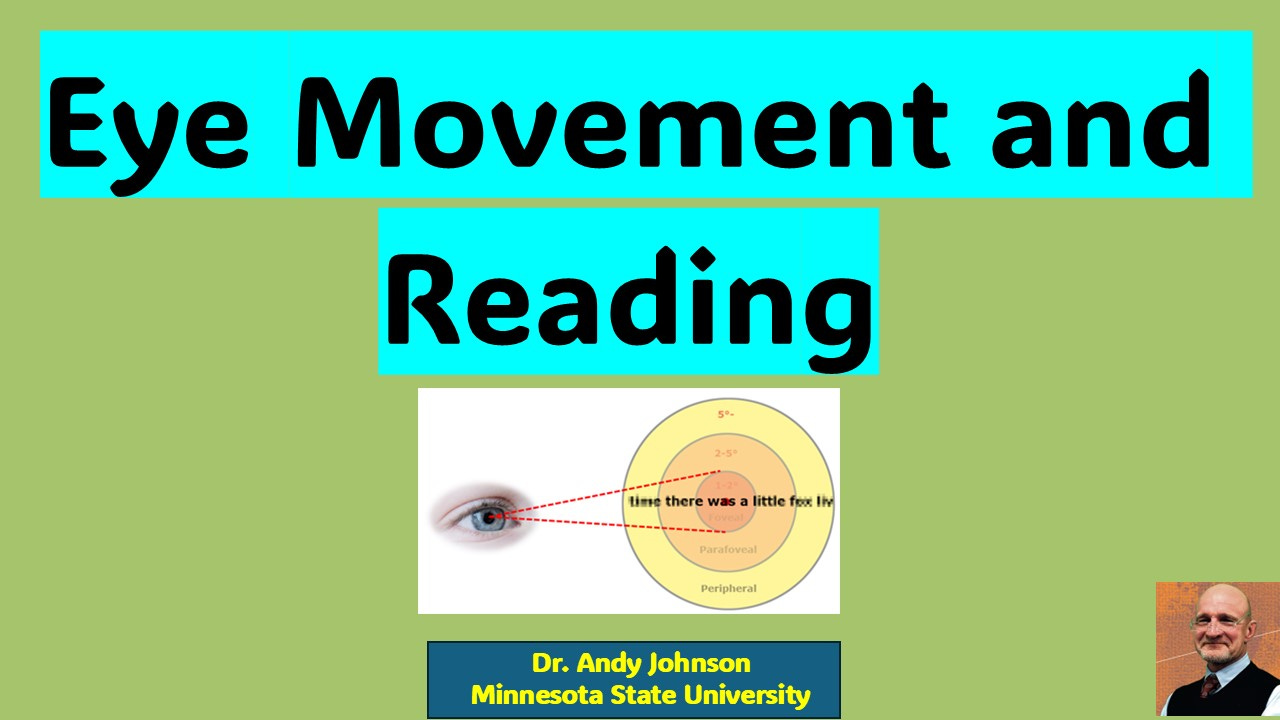
Your eyes have three visual regions: foveal, parafoveal, and peripheral (see Figure 15.2). The fovea takes up only 1% to 2% of your total vision. This is the point of fixation where you are able to see clearly and process details. You can perceive only about three to six letters here. The parafoveal region is the region directly surrounding the foveal region. Here, you are able to perceive about 20 to 30 letters, however not very clearly. In this region, you can identify gross shapes, but without some sort of context, the strings of letters are indistinguishable. The peripheral region is everything else. Here, you are able to perceive only gross shapes.


